
The Creative Intelligence track at Creators Campus helps teens understand how AI actually works — separating myth from reality — and build creative projects with real generative tools, staying the authors of their own work. Projects are published to a public gallery.
The Creative Intelligence track at Creators Campus starts with the myths — separating what's real from what headlines and movies distort — through hands-on experiments and live demonstrations, then digs into how language models actually work (training sets, tokens, hallucination).
Critical thinking is the core skill. AI systems confidently produce false information; working with them well requires the judgment to evaluate output and know when to push back. Students then design personas and agents, even building two performers of the same character — one they physically control, one they program — to make the question of authorship visible and concrete.
Creative Intelligence student work is published to a public gallery — not stored on a teacher's hard drive, but in the world. Participants leave with real fluency: the confidence to use AI tools, the skepticism to catch their failures, and the creative agency to direct them.
Classes
What you can take.
Each class runs as a week-long session. Open one to see what it covers and who teaches it — or filter by week to see what's offered when.
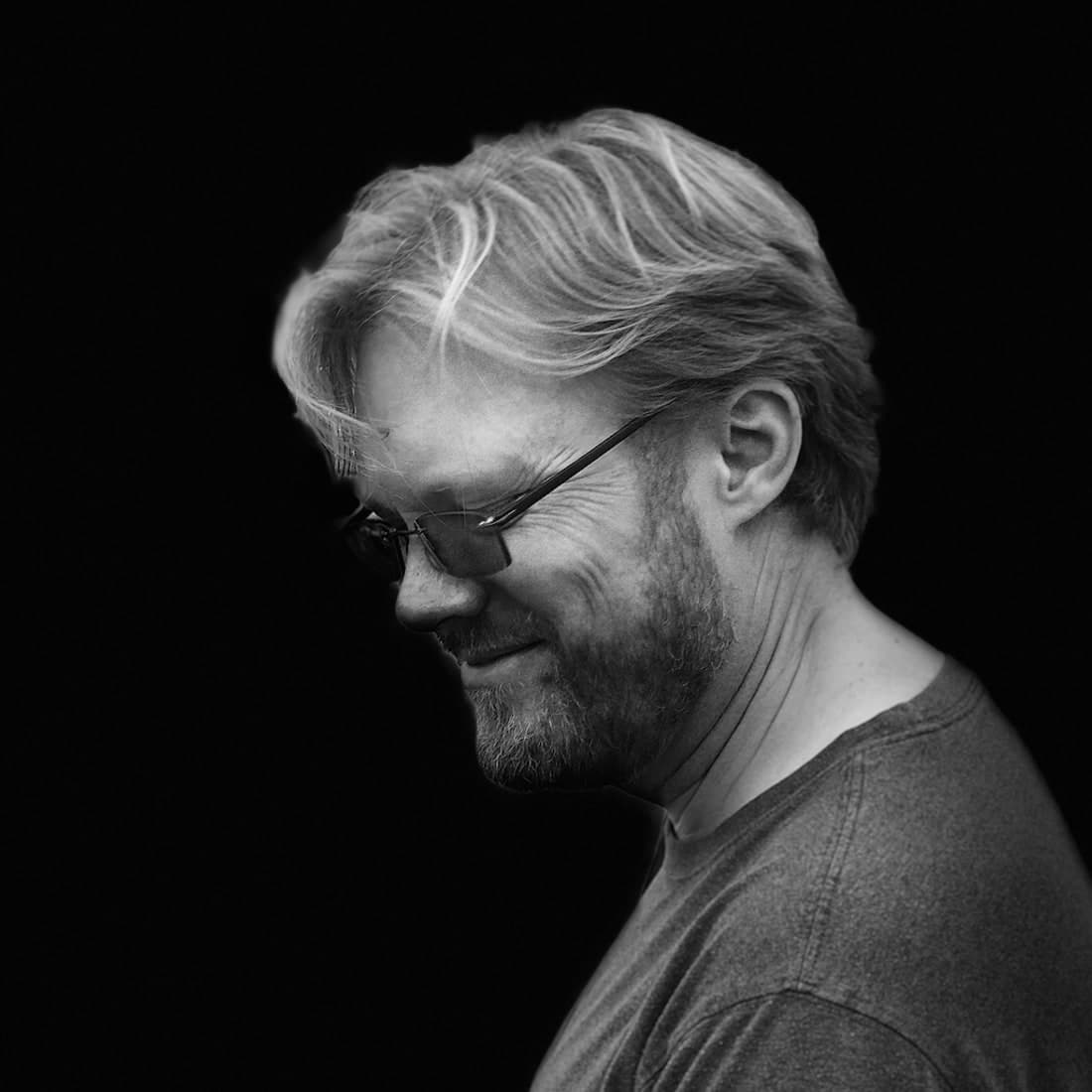
Ghost in the Feed
Week of Jun 22 · Mornings · with Kyle Homstead
Ghost in the Feed
Week of Jun 22 · Mornings · with Kyle Homstead
- One-week intensive
You didn't choose what showed up in your feed this morning. Something else did — and it knew exactly what it was doing. A lot of what it showed you? Made up.
Two systems are quietly shaping what you think without asking permission: the recommendation algorithms that have been profiling you since middle school, and the AI tools that confidently fabricate things and never apologize for it. They're built to be irresistible. This week, you learn how to run the game instead of being played by it.
We start by reverse-engineering your own data profile — what does the algorithm think you want, and why is it trying to make you angry? Then we turn to the content itself: real photo or AI-generated? Breaking news or deepfake? You have blind spots. We find them — and we find them using examples where AI fabrication caused real-world consequences, not just inconvenience.
From there, you'll build your own convincing piece of fabricated content and pitch it to the room while they try to catch you. You'll briefly try to completely derail your actual feed — just to prove you can run the machine when you choose to.
- You leave with
- A Personal BS Detector Field Guide and a Terms of Service for Your Own Brain — exactly when AI gets to help you, when the phone goes away, and what you're not handing over to anyone.
- Led by
- Kyle Homstead →
Minecraft Operator
Jun 22 – Aug 3 · 7 weeks · Afternoons · with Aiden Chappuis
Minecraft Operator
Jun 22 – Aug 3 · 7 weeks · Afternoons · with Aiden Chappuis
- Bring a Minecraft login — temporary ones provided for newcomers
Every Minecraft world you've ever played in lived on someone else's server. This class puts the whole thing in your hands — you build the server, you run it, and you take it home.
You'll work the way real operators do: from the command line, running a computer with no screen to click. Over the week you install and configure a live server (we run PaperMC), edit the config files that decide how the world behaves and who's allowed in, generate your world, and set up a router so players can join from outside your network. Want to go further? We can dig into plugins like WorldEdit, or run a Velocity proxy that hosts multiple worlds on one server.
Your server doesn't just live in class. Every Thursday is Game Night at The Drop — our weekly community night — where we boot it up for a LAN party and open your world to the room.
On the last day, you extract and move the save files so the world we built together comes home with you, yours to keep running — and we save time to just play in and build on what you made.
Run the server. Host the LAN party. Take the world home.
- You will learn
- Operate a computer entirely from the command line — no screen required
- Install and configure a Minecraft server (PaperMC) and generate a world
- Edit configuration files to control the server's settings and access
- Configure a router to open your server to players outside your network
- Extract and move save files to take the shared world home
- You will make
- A live Minecraft server you stood up and configured yourself — your world, yours to keep running at home
- Led by
- Aiden Chappuis →
The Puppet and the Prompt
Week of Jun 29 · with Kyle Homstead
The Puppet and the Prompt
Week of Jun 29 · with Kyle Homstead
- One-week intensive
Ventriloquists knew something computer scientists would spend decades debating: we're hardwired to see minds where there aren't any. From ancient shadow plays to Japanese Bunraku, from Jim Henson building characters out of felt and foam to the AI chatbots you use every day — humans keep trying to put something inside a thing and make it feel inhabited. This course is about how that actually works.
Students design a character — someone with a name, a history, a point of view — and give it two bodies. The first is physical, built by hand from materials in the studio (no experience required; the object can be as simple or as strange as the character demands). The second lives inside an AI agent you write and design from scratch, translating your character's personality into the choices and language that make AI respond the way it does. Neither version has anything going on inside it until you put it there — and working through both is what makes that visible.
The week closes with a live presentation filmed by the LightHouse video team. Performing is one option; walking through your process is another. What it produces isn't a theater piece — it's a point of view: a real understanding of how personality gets built into technology, and what it means to be the person doing the building.
- You leave with
- A character with two bodies — a hand-built physical object and an AI agent you designed — and a real grasp of how personality gets built into technology.
- Signature
- Build one character in two forms — a physical object and an AI agent you write
- A live presentation filmed by the LightHouse video team
- Led by
- Kyle Homstead →
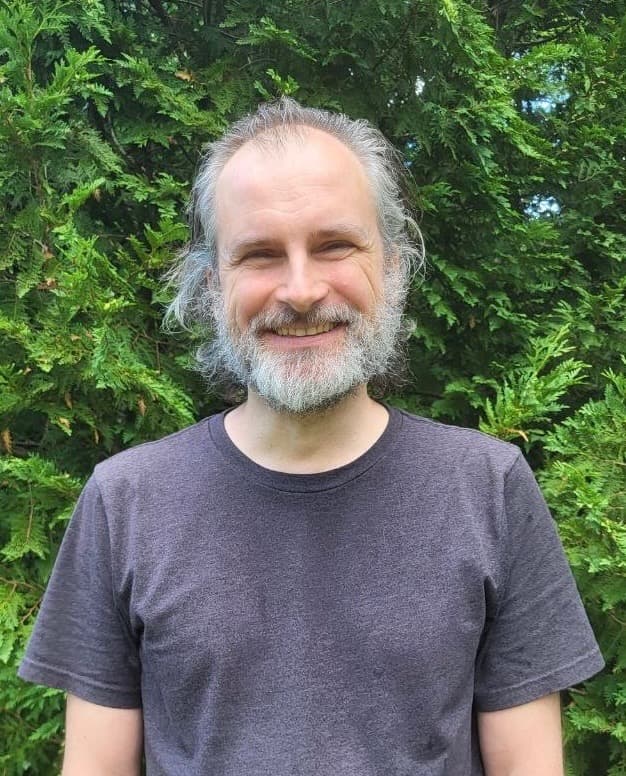
Philosophers in Shorts
Jul 20 – Jul 27 · 2 weeks · Mornings · with Andrei Sukhovskii
Philosophers in Shorts
Jul 20 – Jul 27 · 2 weeks · Mornings · with Andrei Sukhovskii
Big ideas, tiny videos. Some of the most profound thoughts in world literature and philosophy were never meant to scroll past in three seconds — this class makes them do exactly that, on purpose.
You start by finding a quote that actually means something to you, then you do the part most people skip: you read around it — the 500 words before and after, or the whole chapter — until you really understand what it's saying. Then you turn that abstract idea into something you can see. Using collage animation, graphics, and generative-AI tools, you build the raw visuals; in GIMP you cut, compose, and shape them; and in Kdenlive and Synfig you animate it all into a moving collage, with sound design and your own voiceover.
By the end you've made a finished vertical short — your reading, your visuals, your voice — published to the LightHouse community channel.
- You will learn
- Find a philosophical or literary quote that speaks to you — and read deeply around it
- Turn abstract ideas into images using graphics archives and generative AI
- Edit and compose visual assets in GIMP (open-source)
- Animate a collage video in Kdenlive / Synfig with sound design and voiceover
- Export and optimize for vertical short-form video
- You will make
- A finished short-form collage-animation video — your own take on a big idea — published to the LightHouse channel
- Led by
- Andrei Sukhovskii →

I Am Not a Robot: A writing workshop with AI
AM Jul 20 · PM Aug 3 · with David Lane
I Am Not a Robot: A writing workshop with AI
AM Jul 20 · PM Aug 3 · with David Lane
You've proven you're not a robot a thousand times — clicking crosswalks, traffic lights, blurry buses. This week, prove it for real.
Nobody on earth has your exact collection of words: the phrases your family repeats, the vocabulary of the things you love, the sentence stuck in your head since fourth grade. Monday through Wednesday, we'll write together — gathering the raw material of your one-of-a-kind voice, trading it with other writers, and doing something most schools won't let you do: collaborating directly with an AI to bend, break, and build poems and stories that didn't exist when you walked in. You'll discover firsthand what AI can do for a writer with a strong voice — and what it can never do without you. No formulas, no five-paragraph anything, no experience required.
Then Thursday is yours. Perform your piece out loud. Publish it — submit to a journal, print a zine, post it to the world. Share it with friends and family. Or leave with a working draft you can't wait to keep building. You choose what your writing is for, and you'll shape your project around that goal all week.
- You leave with
- A finished piece you set the purpose for — performed, published, or ready to keep building — and a real sense of what AI can and can't do for your writing.
- Signature
- Collaborate directly with AI — and find what it can never do without you
- Led by
- David Lane →
The Machine has no Hands
Week of Jul 27 · Mornings · with David Lane
The Machine has no Hands
Week of Jul 27 · Mornings · with David Lane
A hundred years ago, an artist bought an ordinary object from a hardware store, signed it, and called it art — and the art world has never recovered. This week, you join that troublemaking tradition.
You'll learn the art of finding: pulling small sculptures out of junk drawers, thrift bins, and hardware scraps with basic hand tools, and pulling poems out of pages that were never meant to contain them — newspapers, manuals, old letters — by blacking out everything except the hidden message. No artistic skill required. The material is everywhere. The skill is noticing.
Your collaborator is an AI with a peculiar condition: it has read nearly everything and touched absolutely nothing. It will riff on your objects brilliantly, flood you with titles, and hand you endless raw text to mine — but it has never wandered a sidewalk, never felt the weight of a rusted key, never picked one thing over another because it gave them a feeling. Finding, it turns out, is the one art it can't commit. You'll spend the week discovering exactly where the machine helps you and exactly where it goes blind — and making art out of the difference.
On the final day, we open our gallery: sculptures and poems built entirely from things the world threw away, made by the only artists in the room with hands.
- You leave with
- A gallery of sculptures and found poems made from discarded things — and a clear sense of where AI helps a maker and where it goes blind.
- Signature
- Finding is the one art the machine can't commit
- Led by
- David Lane →
The future of childhood is changing. Let’s think about it together.
The Long Table · Dinner Conversations
Every two weeks, parents, educators, and students gather around a table for one honest conversation. Coming up: Understanding the Data Center Dilemma.
Invites + what’s ahead. No spam.
Learn more →
Every Thursday night, all summer · all ages · no ticket
Thursday nights belong to youth.
Every Thursday all summer, the campus comes alive — live sets on the Soundstage, dinner from the culinary cohort, galleries, games. Come with your family or drop your teen off. No camp connection required.
About The Drop